
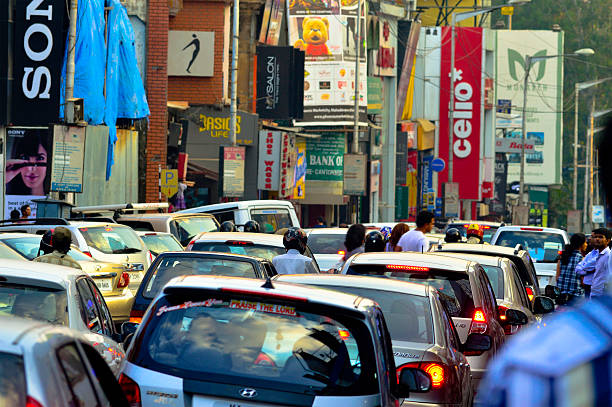

The movement of people and things over time and place has long been used as a gauge of human development. Our means of transportation have continuously changed to accommodate our shifting wants, values, and technical capabilities, from the development of the wheel to the emergence of driverless cars. Due to global trends including urbanization, environmental consciousness, technology advancement, and changing cultural norms, mobility has changed at an astounding rate in recent decades. Moving with purpose is now the focus of this development rather than just going further or faster.
Mobility’s Historical Basis
It’s critical to examine our past in order to comprehend our future. Walking and the usage of animals were the main modes of movement in the past. One of the first transportation revolutions was brought about by the discovery of the wheel in 3500 BCE, which paved the way for the creation of carts, wagons, and chariots.
Centuries later, steam-powered ships and trains brought about by the Industrial Revolution revolutionized trade and mobility. The late 19th century saw the introduction of the internal combustion engine, which changed the structure of cities and society by laying the foundation for vehicles. As autos and public transportation made it possible for individuals to live farther away from their places of employment, mobility became more accessible to everybody.
Economic demands, technical constraints, and cultural standards all influenced transportation in its respective eras. However, a new layer—purpose-driven innovation—is being introduced in the twenty-first century.
The Growth of Smart Cities and Urbanization
The United Nations estimates that by 2050, 68% of the world’s population would reside in urban regions, up from the current 50%. The difficulty posed by this fast urbanization is how to transport people in crowded spaces in an economical, sustainable, and effective manner.
Smart cities—urban regions that leverage data and digital technology to enhance infrastructure and services, including transportation—hold the key to the solution. In order to provide a smooth user experience, integrated mobility solutions are being created to link ride-sharing platforms, buses, subways, and bicycles.
Cities that are setting the standard include Singapore, Copenhagen, and Amsterdam. To maximize mobility flows, they use real-time data analytics, AI-powered traffic management, and congestion pricing. These developments seek to improve public health, lower emissions, and free up urban space for people instead of cars. They are not simply about convenience.
Transportation Electrification
One of the biggest changes in the history of transportation is the switch from fossil fuels to electric power. Electric vehicles (EVs) are becoming a major focus of contemporary transportation policy due to worries about climate change, air pollution, and energy security.
Globally, governments are putting their ambitious plans to phase out internal combustion engines into action. By 2035, for instance, the European Union intends to outlaw the sale of brand-new gasoline and diesel vehicles. Large automakers like Volvo, Volkswagen, and General Motors are spending billions on electrification.
However, electrification extends beyond automobiles. There are plans to produce electric motorcycles, buses, scooters, and even airplanes. In addition to creating cleaner, calmer, and more effective urban settings, these technologies seek to lower greenhouse gas emissions.
MaaS (mobility as a service): From ownership to accessibility
The transition from car ownership to shared mobility is another revolutionary movement. A rising demand for flexibility over ownership is reflected in the emergence of Mobility-as-a-Service (MaaS) platforms, which are integrated digital apps that provide access to numerous modes of transportation.
Using a single interface, MaaS applications in cities enable users to plan, book, and pay for a journey that may include a bike ride, a subway trip, and a ride-share. These services have a strong emphasis on efficacy, affordability, and less environmental impact.
Younger generations who place a higher importance on experiences than material belongings are particularly fond of this approach. On-demand and shared mobility is becoming the new standard due to a confluence of convenience, environmental, and economic considerations.
Autonomous Automobiles: The Upcoming Development
Perhaps the most innovative and revolutionary advancement in transportation is the introduction of autonomous vehicles (AVs). AVs can negotiate highways without human assistance thanks to AI, sensors, and machine learning; this has the potential to transform not just transportation but also society as a whole.
AVs’ proponents contend that they will lessen traffic, prevent accidents brought on by human mistake, and provide those who can’t drive—like the elderly and the disabled—mobility. By doing away with the need for extensive parking infrastructure, they might potentially change the way cities are designed.
AVs do, however, present a number of difficult issues, including cybersecurity, safety, regulatory, and ethical issues. Although completely autonomous cars are not yet common, cities all over the globe are actively testing pilot programs and limited-use cases (such as delivery bots or self-driving taxis).
Climate Responsibility and Sustainability
The climatic catastrophe is defining the purpose of contemporary mobility more than any other element. Since transportation is responsible for around 25% of CO2 emissions worldwide, it is imperative that it be addressed.
Sustainable transportation is now required, not a choice. Countries and cities are enacting low-emission zones, creating vast bicycle networks, and encouraging the use of public transportation rather than private vehicles. With an emphasis on long-term ecological balance, green mobility policies are being included into climate action plans.
Additionally, this push for sustainability is affecting how consumers behave. Consumers are favoring companies that put environmental responsibility first and choose eco-friendly modes of transportation. Today’s mobility, from low-carbon freight solutions to carpooling applications, is motivated by a common goal: to save the environment.
Fair and Inclusive Mobility
Social fairness must be considered in modern mobility. Opportunities for underprivileged people are limited by unequal access to transportation in many places. Creating solutions that are accessible, inexpensive, and inclusive for everyone is the goal of purpose-driven mobility.
This entails extending public transportation into underprivileged areas, enhancing the facilities for passengers with disabilities, and making sure digital platforms are usable by individuals of all ages and abilities.
Quality of life, social inclusion, and economic engagement are all enhanced by an inclusive mobility system. Equity must be a primary consideration, not an afterthought, as we reimagine mobility.
Innovation and Convergence of Technology
Mobility in the future depends on innovation ecosystems rather than only new cars or roads. A new age of linked mobility is being made possible by the confluence of technologies like 5G, blockchain, the Internet of Things (IoT), and artificial intelligence.
To maximize efficiency and safety, smart cars connect with the infrastructure and one another. Transport networks can flexibly adjust to demand thanks to real-time data. Blockchain technology is being investigated for safe and open ride-sharing transactions. There are several options.
Governments, tech behemoths, established automakers, and startups are all making investments in this next wave of mobility innovation. These partnerships are broadening the realm of what is feasible and quickening the rate of change.
Mobility’s Human-Centered Future
As mobility advances, more people are realizing that success cannot be defined only by technology. Serving people—improving lives, fostering community connections, and producing meaningful experiences—is the ultimate goal of mobility.
Involving individuals in the development of mobility solutions is a component of this human-centered approach. It entails planning excursions that are secure, entertaining, and respectable. It entails taking into account how well-being, happiness, and health are impacted by mobility.
Mobility is a social contract, not only a technological problem. We must include the principles of sustainability, fairness, and shared prosperity into the redesign of our systems.
Conclusion: Purposeful Movement
The development of contemporary mobility is a tale of mankind as much as it is of technology and systems. Our modes of transportation, whether they are electric scooters or antiquated carts, congested freeways or AI-guided transit systems, reveal our values and identity.
We are reaching a turning point today. Future generations’ lives, cities, and planet will be shaped by the transportation decisions we make this decade. Will we keep putting convenience first at all costs? Or will we take deliberate action, driven by sustainability, equality, and purpose?
Motivated by a sense of purpose, mobility is evolving from a practical need to a forum for creativity, inclusivity, and international advancement. One thing is certain as technology advances and the stakes increase: moving forward involves more than simply going from point A to point B. It concerns how we proceed as a team.