
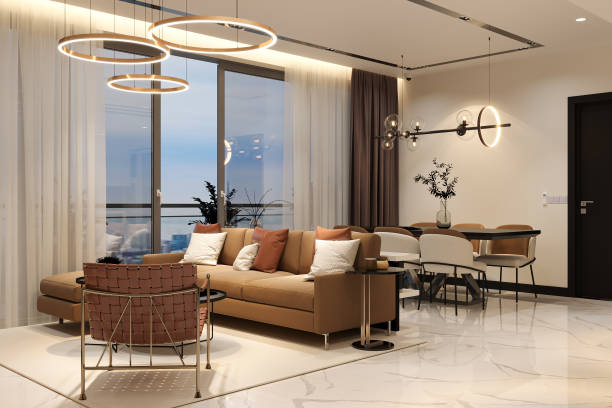

In addition to being a place to sleep, the contemporary house serves as a gym, a workplace, a school, a refuge, and a mirror of our deepest personal beliefs. The places we live in must change with us as our lives get more complicated and the lines between private and public life become more hazy. What used to be fixed is now fluid. And there are opportunities as well as challenges in this change.
Recognizing that our needs are evolving and that our surroundings must change is the first step in redefining the contemporary house. Living in the future will be adaptable, deliberate, and very human-centered. The goal is to create houses that serve ourselves rather than merely those around us.
From Refuge to Sanctuary: A Change in Objective
The house was traditionally constructed for regularity, safety, and shelter. Today, however, it is expected to accomplish more. The importance of the household has significantly increased after a worldwide epidemic, a technology revolution, and a cultural reset.
Now, we turn to our houses to provide:
An emotional haven in a world with too many connections
Adaptability to job, education, exercise, and relaxation
Adaptability when our identities, families, and jobs change
Creating connections via common areas and thoughtful design
Expression of uniqueness, aesthetics, and values
Today’s house is more than simply a place to live; it’s a way of life.
1. The New Luxury Is Flexibility
The days of rooms serving just one use are long gone. Today’s co-working space is yesterday’s dining room. These days, the guest room doubles as the Peloton corner, the podcast studio, or the meditation space.
Creating an adaptable design entails:
Using furniture that is modular and can change as needed
establishing zone-based arrangements for work, play, and relaxation in public areas
Adopting movable barriers, walls, or curtains for seclusion when necessary
Purchasing multipurpose storage to reduce visual clutter
Flexibility is not only a desirable quality in this era of fast change; it is a need.
2. The Development of the Home Office (and the Requirement for Limits)
Working remotely has become the new standard rather than a fad. However, it also presents the difficulty of preserving equilibrium, mental well-being, and attention.
Essential Components of a Contemporary Home Office: A dedicated area, no matter how little, that is mentally and visually isolated from family life
Long-term posture and productivity are supported by ergonomic furniture.
Greenery and natural light may help concentrate and lessen weariness.
Technology integration: enough illumination, soundproofing if necessary, and strong Wi-Fi
Beautiful design that uplifts rather than depletes
Perhaps most crucial, however, are distinct limits. It should be time to go home after work. Burnout may result from blurring such boundaries too often.
3. Design Focused on Wellbeing
Nowadays, being healthy involves more than simply eating well and getting sufficient sleep. It has to do with how we perceive space.
Wellness-promoting homes often incorporate:
Natural materials such as linen, stone, and wood
Using biophilic architecture and plants to bring nature indoors
soothing color schemes that aid with nervous system relaxation
Using carpets, fabrics, or soundscaping to reduce noise
With purifying systems and well-considered lighting design, air and light quality
Nowadays, wellness is ingrained in the walls, the floors, and the sense of home, rather than existing as a destination.
4. Conscious living and sustainability
In addition to becoming smarter, the changing house is also more responsible. Sustainability is becoming a need rather than a specialty.
Smart thermostats and energy-efficient appliances are two examples of how sustainability is redefining homes.
Eco-friendly materials such as cork, bamboo, or repurposed wood
Water-saving fixtures for bathrooms and kitchens
Reducing overbuilding and encouraging reuse via waste-conscious design
Integrations of solar panels with renewable energy
Building and designing with the environment in mind, constructing houses that sustain ecosystems and people, is what it means to live consciously.
5. Micro-Neighborhoods and Community Living
Co-living and micro-communities are becoming more popular as cities become more costly and people want for closer connections.
Priorities for these new types of homes are:
Common areas such as coworking spaces, gardens, and kitchens
Private areas in a broader public setting
Larger eating rooms, outdoor patios, and fire pits are all part of the gathering-friendly design.
Value alignment is when individuals unite because they have similar beliefs or passions.
The future of house may be more about interdependence than isolation, whether it takes the form of contemporary cohousing models or multigenerational housing.
6. Smart Living and Technology
AI-powered thermostats and voice-activated assistants are just two examples of how smart technology is changing how we use our homes.
The finest smart homes, however, prioritize usability and human interaction above technological advancements.
Modern Needs Are Supported by Smart Home Trends: Lighting controls that adapt to circadian cycles
Security measures that provide comfort rather than fear
Time-saving and energy-efficient appliances
Climate, entertainment, and work-related voice or app control
Automating routine chores (such as shopping lists or housework)
Instead than overwhelming, technology should make things easier. When carefully included, it makes the house a quiet companion in day-to-day living.
7. Creating for Self-Expression and Identity
The contemporary house reflects individuality and is more than just a showcase. Since no two lives are same, no two houses should have the same appearance.
This change is about significance over simplicity and curation over consumption.
Individuals are becoming more and more
adorning walls with artwork, souvenirs from trips, and handcrafted items
Using layout and color to convey personality and emotion
Including spiritual areas or ceremonial items in the house
Creating unified design languages by fusing memories, cultures, and aesthetics
Houses are becoming become visual diaries. Every decision has a backstory.
8. The Integration of Outdoors and the Return to Nature
Incorporating nature into our living areas is essential at a time when we spend more time inside than ever before.
Indoor-outdoor design thrives in this situation:
Terraces, balconies, and courtyards as additions to living areas
Urban dwellings may include nature via vertical gardens or green walls.
Lounges or kitchens outside that allow people to socialize without leaving the house
Materials (such as stone, wood, or glass) that merge in both inside and out to create a flowing design
The natural world is healing. And even in small spaces, houses that respect that reality seem larger.
9. Reevaluating Size: Prioritizing Quality Over Quantity
Bigger isn’t always better nowadays. Many are opting for smaller, more intelligent places due to changing lifestyles, urban crowding, and growing prices.
This change has spurred innovation in:
Compact dwellings that make every square inch useful
Essentials are given priority under minimalist concepts.
Furniture that can be folded away or concealed to save space
Effective storage that keeps things tidy and peaceful
Intentional design can make even a little area seem infinite.
10. The Emotional Blueprint: Creating the Modern Way of Life
The contemporary house is ultimately about designing environments that are emotionally nurturing in addition to being practically useful. This is known as emotionally intelligent design.
This entails creating for:
Connection: communal eating areas, open kitchens, and cozy living spaces
solitude: peaceful areas, healing chambers, and comfortable reading nooks
Growth: flexible workplaces, libraries, and creative areas
Morning light in the kitchen and nighttime silence in the bedroom are rituals.
Transition: welcoming entrances, orderly mudrooms, and space-holding thresholds
A well-designed home improves life rather than just housing it.
The Changing House Is a Living Mirror, in Conclusion
Our environments must change to meet our changing requirements. The house of the future is a living, breathing, adaptable structure that changes in time with its occupants rather than being a set plan.
The secret is the same whether you live in a co-living pod, a distant cottage, a suburban home, or a loft in the city: build with purpose. Pay attention to your life. Respect your patterns. Additionally, let your space reflect your actual demands.
Because reinventing the contemporary house is about thriving, not simply about how we live.